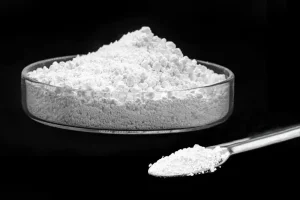
Selected baseline chemical compounds bridging the chemical engineering demands of the Bosphorus trading corridor and global logistics.
Nitrates represent the foundational bedrock of modern chemical synthesis, macro-nutrient delivery, and thermal heat exchange media. As global industries demand higher chemical purity, lower halide counts, and more reliable logistical pipelines, the role of manufacturers operating through pivotal trading hubs like Istanbul becomes critical. Bridging the gap between primary extraction reserves and targeted regional industrial users in Southern Europe, the Middle East, and North Africa (MENA), regional distribution centers provide key advantages in mitigating lead-time fluctuations and regulatory compliance barriers.
Istanbul, functioning as the primary transshipment node between European markets and East Asian industrial centers, offers structural benefits to procurement agents seeking reliable chemical supply chains. Utilizing the ports of Ambarli, Tuzla, and Dilovasi, regional manufacturers and warehouse facilitators can bypass typical maritime chokepoint delays. A local presence in Istanbul allows for real-time delivery scheduling, rapid customs clearance within the EU-Turkey Customs Union, and simplified compliance documentation under regional chemical frameworks.
A primary operational challenge in handling industrial-scale nitrate compounds—specifically Potassium Nitrate (KNO₃), Sodium Nitrate (NaNO₃), and Calcium Nitrate (Ca(NO₃)₂)—is their high propensity for hygroscopic moisture absorption and subsequent caking. Free-flowing crystals are essential for dry blending processes, molten salt charging, and pneumatic conveying lines. Modern synthesis lines address this through high-efficiency crystallization parameters, ensuring uniform particle size distribution (PSD) and utilizing proprietary, eco-compatible organic anti-caking coatings that do not compromise the purity required in optical glass or thermal energy storage systems.
In the transition toward renewable energy, binary and ternary molten salt mixtures act as critical heat transfer fluids (HTF) and thermal energy storage (TES) components. The standard "Solar Salt" configuration—consisting of 60% Sodium Nitrate and 40% Potassium Nitrate—operates at temperatures up to 565°C without decomposing. At this thermal threshold, impurity control becomes paramount. Traces of chlorides (Cl⁻) and sulfates (SO₄²⁻) must be kept below 0.05% to avoid aggressive galvanic corrosion in steel alloys, storage tanks, and steam generation exchangers.
Modern intensive agriculture relies heavily on fully water-soluble fertilizers for greenhouse drip irrigation and foliar applications. Potassium Nitrate provides a highly bioavailable source of nitrogen (in the nitrate form, NO₃⁻) and potassium (K⁺), supporting plant development without contributing ballast chlorides or sodium ions that degrade soil structure. Calcium Ammonium Nitrate (CAN) further supports acidic soils by supplying readily accessible calcium alongside balanced nitrogen components, correcting calcium deficiencies in crops under high heat stress.
The manufacturing sector is entering a transitional phase aimed at decoupling nitrate production from carbon-intensive fossil fuel feeds. The upcoming technical roadmap prioritizes:
Providing specialized formulations optimized for specific thermal, chemical, and biological environments.
High-capacity molten salt mixtures engineered for utility-scale Concentrated Solar Power (CSP) facilities and industrial waste heat recovery.
Iron-free and low-chloride potassium nitrate variants specifically suited for chemical strengthening processes in mobile device glass manufacturing.
Precise oxidizing agents for metal surface treatment, salt baths, oxidation processes, and structural steel descaling lines.
Fully soluble nitrogen-potassium formulations that prevent salinity buildup while improving absorption dynamics in high-yield crops.
Supporting massive bulk supply chains and international clients with scalable infrastructure.
A comprehensive chemical portfolio optimized for industrial manufacturing, agricultural formulations, and construction chemicals.
Direct technical explanations on storage, product specifications, and import/export compliance.
Supporting leading names in chemical synthesis, solar energy, and industrial manufacturing.

 VOJIN
VOJIN