Explore our core export-grade chemical portfolio optimized for global potato fertigation, greenhouse horticulture, and industrial chemical processing.
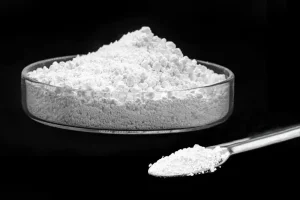
Analyzing physiological transport mechanisms, cell structure fortification, and yield metrics for modern potato farming enterprises.
In modern high-density agricultural systems, the potato crop (Solanum tuberosum L.) stands as one of the world's most vital carbohydrate and nutritional staples. Achieving peak commercial returns requires not merely gross biomass yield, but strict adherence to skin quality, specific gravity, uniform tuber sizing, and post-harvest storability. Central to achieving these parameters is balanced nitrogen and calcium nutrition—a biochemical equilibrium best supplied via Wholesale Calcium Nitrate ($Ca(NO_3)_2$).
Agronomic Paradigm Shift: Modern potato fertigation protocols are replacing traditional ammonium-based nitrogen sources with fully water-soluble Nitrate-Nitrogen ($NO_3^-$). Nitrate-nitrogen significantly speeds up cation uptake ($Ca^{2+}, K^+, Mg^{2+}$) within the root zone, reducing physiological disorders like Internal Brown Spot (IBS) and Soft Rot by up to 68%.
Calcium is a structural constituent of plant cell walls, deposited as calcium pectate in the middle lamella. Unlike mobile macronutrients like Nitrogen or Potassium, Calcium moves through the plant almost exclusively via the apoplastic pathway driven by transpiration stream pull. Because potato tubers develop underground in a humid soil micro-environment with minimal transpiration, direct root-zone concentration of readily available water-soluble calcium ($Ca^{2+}$) during tuber initiation and bulking is paramount.
Inadequate calcium deposition leads to localized structural collapse of tissue cell membranes, triggering physiological conditions such as:
Nitrogen form fundamentally changes root zone chemistry. When plants take up ammonium ($NH_4^+$), they pump out hydrogen ions ($H^+$), lowering rhizosphere pH and competing directly with positively charged calcium ions ($Ca^{2+}$) for transport channels. Conversely, nitrate-nitrogen uptake encourages hydroxyl ($OH^-$) or bicarbonate ($HCO_3^-$) release, optimizing local rhizosphere pH and stimulating synergistic uptake of essential cations.
Produced at our Shanxi facility under ISO9001 quality management, ensuring zero insoluble residues and rapid drip-irrigation dissolution.
Our agricultural calcium nitrate features a 100% water solubility index, dissolving instantly without creating sediment that clogs drip emitters, micro-jets, or pivots. Heavy metals like Cadmium (Cd) and Lead (Pb) are strictly maintained below 5 ppm.
Formulated specifically for potato cropping cycles, delivering 15.5% Nitrogen (14.4% Nitrate-N, 1.1% Ammonium-N) paired with 19% fully bio-available Calcium ($CaO \ge 26\%$). This ratio supports balanced vegetative growth without over-triggering foliage growth at the expense of tubers.
Utilizing proprietary eco-friendly anti-caking compounds, our prilled and granular products maintain excellent flowability during long-distance oceanic transport and tropical high-humidity storage conditions.
Maximizing Return on Investment (ROI) per hectare by aligning chemical application timing with physiological growth stages.
Timing: 15-25 Days Post-Planting.
Agronomic Focus: Establishes root infrastructure and early canopy development. Apply light doses of Calcium Nitrate to build strong vascular stems and prevent early-season stem weakness.
Timing: Stolon Tip Swelling Stage.
Agronomic Focus: CRITICAL PHASE. Calcium must be present in the soil solution around developing stolons. Direct cell division requires high calcium concentrations to set uniform tuber numbers per hill.
Timing: Main Expansion Phase.
Agronomic Focus: Peak uptake stage. Split applications of Calcium Nitrate combined with Potassium Nitrate via fertigation prevent internal physiological breakdown and maintain steady tuber expansion.
Timing: 20-30 Days Pre-Harvest.
Agronomic Focus: Nitrogen is tapered off while Calcium levels remain stable to reinforce cell wall thickness, promoting firm skin set, reducing mechanical harvest bruising, and prolonging storage rot resistance.
Combining world-class chemical manufacturing capacity with specialized agricultural supply chain capabilities.
Driven since 2000, SHANXI VOJIN NEW MATERIALS CO., LTD. has grown into an industry-leading enterprise spanning approximately 1,000 acres in Shanxi province—China's core inorganic chemical manufacturing region. With an annual production output exceeding 600,000 metric tons of molten salts and soluble nitrate series, we provide reliable, high-grade agrochemicals and industrial inputs to agricultural producers across 40+ countries.
Our state-of-the-art facility integrates raw material refining, continuous crystallization, automated prilling towers, and custom OEM packaging lines under rigid environmental and safety standards.
High-purity nitrate salts supplied for concentrated solar power (CSP) and thermal energy storage systems.
Specialized inorganic chemical intermediates utilized in industrial heat transfer and coal conversion processes.
Ultra-pure chemical grades designed for optical glass strengthening and display device production lines.
100% water-soluble fertigation inputs for open-field crops, commercial greenhouses, and hydroponics.
Navigating global agricultural input standards, REACH compliance, and customized bulk packaging requirements.
Importing agricultural inputs at scale demands strict compliance with regional safety, environmental, and labeling regulations. Shanxi Vojin New Materials Co., Ltd. provides robust global support, supplying documentation and customized formulations designed to satisfy regional import frameworks.
Fully compliant with EU REACH registration requirements for inorganic nitrates. Heavy metals and insolubles are verified below strict European thresholds, rendering our products eligible for high-tier agricultural distribution networks.
Formulated to align with the Association of American Plant Food Control Officials (AAPFCO) standards in North America and SENASA guidelines in Latin America. Guaranteed analysis labels are available in English, Spanish, and Portuguese.
Flexible packaging formats available: 25kg or 50kg woven PP bags with PE inner liners, or 1,000kg to 1,250kg heavy-duty Jumbo Bags with moisture-sealed barriers. Containerized shipping optimized to maximize freight efficiency.
Pioneering next-generation crop nutrition through advanced manufacturing, nano-coating technologies, and eco-friendly synthesis pathways.
Development of bio-degradable polymer coatings designed to modulate nitrate release in sandy, highly leachable potato-growing soils, extending nitrogen retention by up to 35% during heavy rainfall seasons.
Collaborating with precision agriculture partners to sync chemical dissolution rates with automated soil moisture and EC sensors, allowing real-time adjustment of calcium uptake rates during heat spikes.
Investing in hydrogen-assisted nitric acid manufacturing pathways to systematically lower the carbon footprint of our nitrate salts, offering zero-carbon fertilizers for sustainable global supply chains.
Expert insights covering product application, chemical compatibility, storage handling, and commercial ordering.
While gypsum contains calcium, its water solubility is extremely low (~2 g/L at 20°C) compared to Calcium Nitrate (~1200 g/L). In drip fertigation and center-pivot systems, Calcium Nitrate provides immediate $Ca^{2+}$ availability to stolons and tuber roots during critical expansion windows, whereas gypsum acts as a slow-release soil amendment.
No. Calcium Nitrate should never be mixed directly in concentrated stock tanks with soluble sulfates (e.g., Magnesium Sulfate, Potassium Sulfate) or phosphates (e.g., Monoammonium Phosphate). This causes immediate precipitation of insoluble Calcium Sulfate (gypsum) or Calcium Phosphate, clogging irrigation systems. Use a dual-tank system (Tank A: Calcium & Iron; Tank B: Phosphates, Sulfates, Micro-elements).
Soft Rot bacteria secrete pectolytic enzymes that degrade plant cell walls. Higher concentrations of calcium deposited in tuber cell membranes form strong calcium pectate cross-links, rendering the cell walls mechanically resistant to enzymatic breakdown during post-harvest transit and long-term cold storage.
Our standard export Minimum Order Quantity starts at 20 Metric Tons (one 20ft full container load). Standard production and packing lead times range between 10 to 15 business days following order confirmation, backed by continuous factory production capacity of 600,000 tons annually.
Calcium Nitrate is a physiologically alkaline fertilizer. As plants absorb the nitrate anion ($NO_3^-$), root cells release hydroxyl ions, maintaining or slightly elevating root-zone pH. Unlike chloride-based fertilizers, it does not leave toxic sodium or chloride residues in soil, making it ideal for continuous cropping systems in arid or saline-prone soils.
Because Calcium Nitrate is hygroscopic, we provide heavy-duty dual-layer packaging featuring an outer woven polypropylene (PP) layer combined with a thick polyethylene (PE) inner liner. For automated mechanical handling, 1000kg jumbo bags equipped with bottom discharge spouts are available.
Stay informed about Shanxi Vojin New Materials Co., Ltd.'s research developments in molten salt technologies and high-efficiency agricultural chemical formulations.
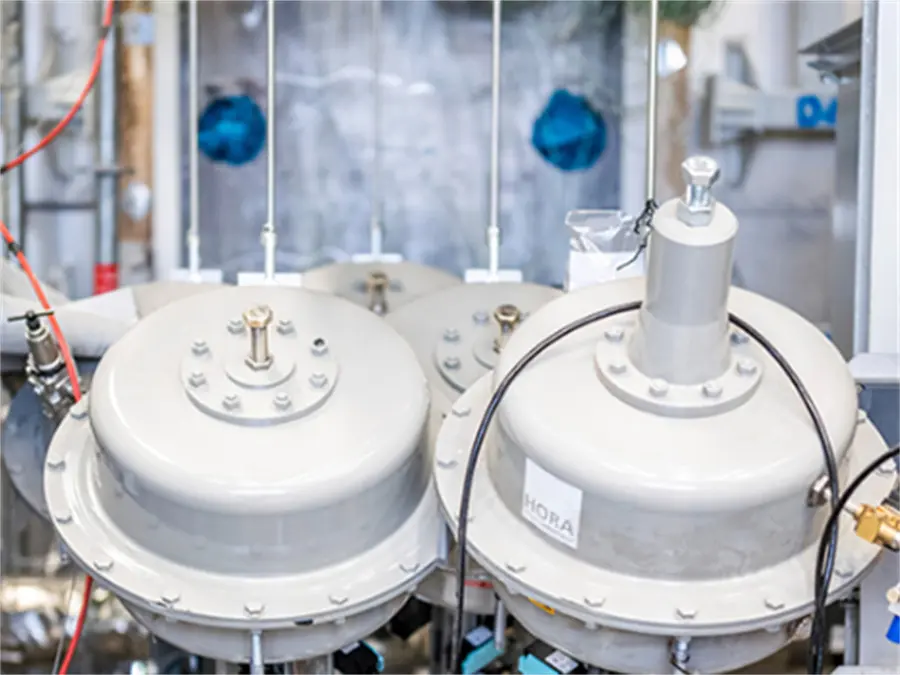
Advancements in our industrial-grade nitrate salt formulations operate at elevated operational temperatures, significantly enhancing energy density and thermal efficiency in solar storage complexes...
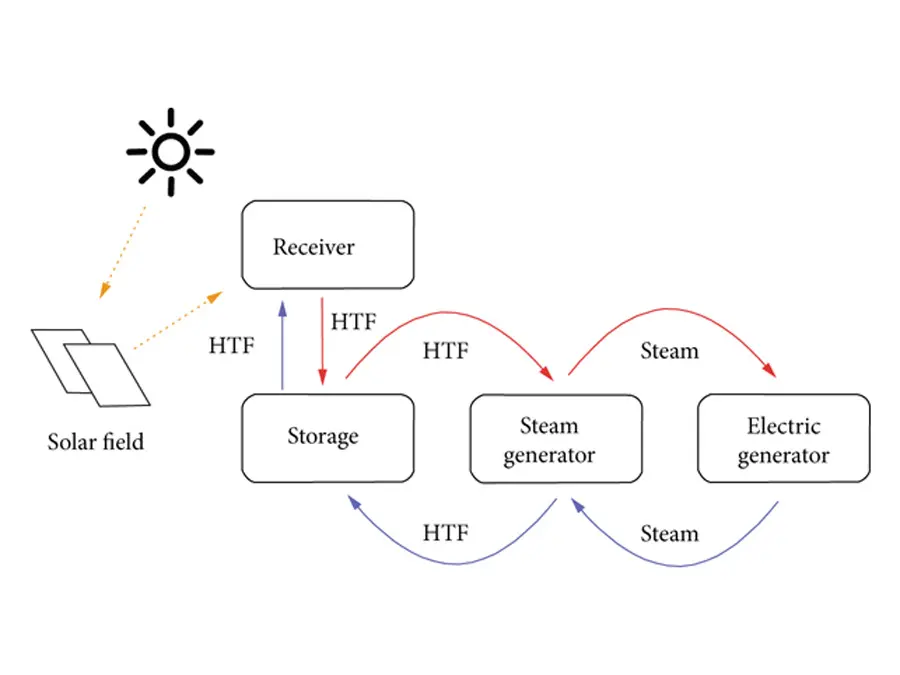
Concentrated solar power systems require ultra-pure inorganic nitrate blends. Our specialized production lines guarantee low corrosion profiles for molten salt circulation pumps...

Molten salt energy storage has emerged as a cornerstone solution for balancing renewable power grid fluctuation. Learn how our manufacturing scalability supports large-scale clean energy projects...
Supplying world-class agricultural distributors, chemical blenders, and industrial energy leaders across more than 40 countries worldwide.


Explore our broader chemical synthesis capabilities including industrial nitrates, lithium compounds, and specialty water-soluble nutrients.
 VOJIN
VOJIN