Potassium nitrate can look like a simple white crystal in a product sample, but buying it well takes more than comparing prices. Buyers need to understand what a particular grade is intended for, how its specifications are documented, and whether it fits their process. Kegunaan Potassium Nitrate vary by industry and product grade, so a supplier’s description should never replace a technical data sheet.
This guide offers seven practical checks for evaluating a purchase. It covers grade and purity, certificates of analysis, packaging, storage conditions, supplier communication, delivery planning, and the intended application. Small details matter. A damp, poorly sealed bag, for example, may raise questions about handling and product condition. Request current documentation, confirm the listed specification against your requirements, and ask how batches are identified. If an answer is vague, pause.
Price still matters. So does reliability. Yet the lowest quote may not reflect freight, quality controls, or the cost of an unsuitable grade. Compare like with like, and consult qualified technical staff when application requirements are unclear. Follow the supplier’s safety information and applicable workplace procedures when handling or storing any chemical product. Some purchasing choices will remain imperfect; supply needs can change, and paperwork does not remove every uncertainty. Thoughtful questions make those uncertainties easier to assess.
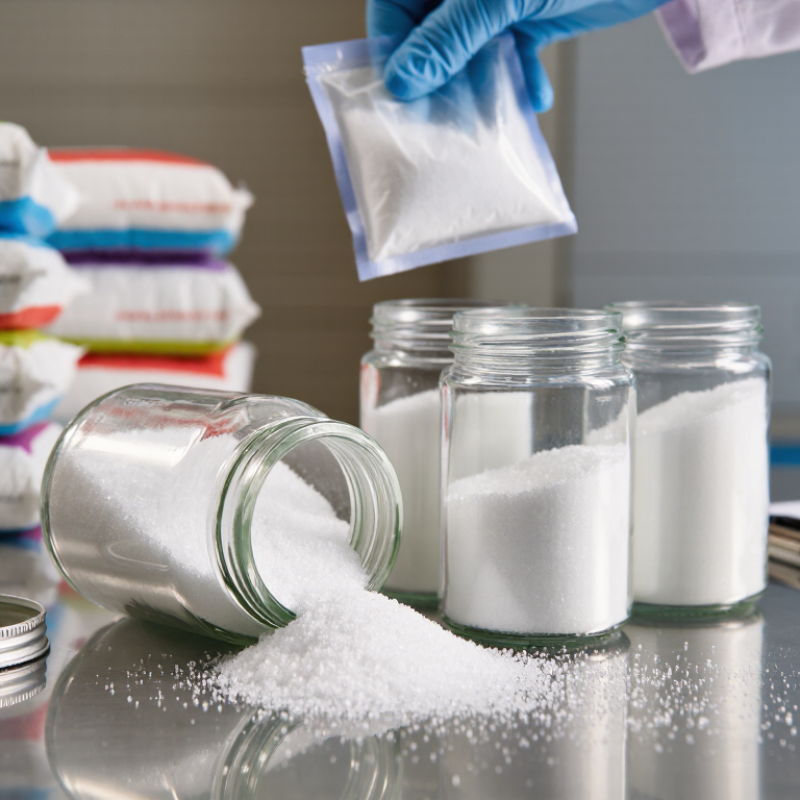
Potassium nitrate, also called nitrate of potash, supplies two plant nutrients in one water-soluble salt: nitrogen and potassium. Commercial fertilizer grades commonly list about 13% nitrogen and 46% potassium oxide equivalent, according to the International Fertilizer Association’s fertilizer nutrient materials. Check the guaranteed analysis on the product label; grades and specifications can vary. That ratio matters when matching a purchase to a crop’s nutrient plan, since buyers may need potassium without adding much phosphorus. Not a universal fit.
Solubility affects storage, handling, and application. The National Center for Biotechnology Information’s PubChem record reports water solubility of about 316 grams per liter at 20°C. In practical terms, a sample can dissolve readily in water, but damp storage or poorly sealed bags can still create handling problems. Inspect packaging, ask for a current certificate of analysis, and confirm particle size and moisture limits before ordering. Small details matter. The FAO’s fertilizer-use database tracks nutrient consumption by country and year, but it does not establish which fertilizer suits an individual field. Buyers should compare the product specification with soil-test results and local agronomic advice; even a standard grade may not meet a particular crop’s needs.
Potassium nitrate serves several industries because it supplies potassium and readily available nitrate nitrogen. In agriculture, buyers use it for fertigation and foliar feeding, especially when crops need potassium without added chloride. The FAO’s 2022 fertilizer assessment reported global nutrient use of about 185 million tonnes in 2020; this is a broad market indicator, not a measure of potassium nitrate demand. In concentrated solar power, nitrate-based molten salts can store heat for later electricity generation. A US Department of Energy review describes typical molten-salt operating temperatures of roughly 290–565°C. Food processing is another regulated application, but specifications and permitted uses vary by market.
Tip: Match the grade to the process. Check the certificate of analysis, solubility, particle size, and moisture limits before comparing prices. Ask how the material is packaged; damp granules can bridge in a hopper. Small detail, real cost.
For crop use, compare nutrient content and water quality, then run a compatibility test before mixing products. For thermal storage, buyers should confirm purity and thermal stability against the system design. For any application, request current safety and quality documents from the supplier, and verify them independently. A neat specification sheet is useful, but it is not the whole story.
For buyers, “potassium nitrate” is not a complete specification. Compare the stated nitrogen and potash analysis, not just the product name. Pure KNO3 calculates to about 13.9% nitrogen and 46.6% K2O equivalent; commercial fertilizer labels commonly round this to 13-0-46. The FAO’s fertilizer statistics report global nutrient use in the hundreds of millions of tonnes, but that scale does not make every grade interchangeable. Small differences matter in concentrated solutions.
Ask for a current certificate of analysis and check the test method, batch number, moisture, water-insoluble matter, and relevant impurities such as chloride. Then match particle size and solubility to your equipment: fine crystals may dissolve quickly, while dusty bags can be unpleasant to handle. A specification sheet should state whether values are guaranteed minimums or typical results. That distinction is easy to miss.
Compare suppliers using the same sampling basis and test method. The International Fertilizer Association’s World Fertilizer Outlook tracks nutrient demand, but it does not certify individual lots; buyers still need batch-level evidence. Check that packaging is sealed and legibly labeled, and request a retained sample when consistency is critical. Paperwork helps. It is not proof by itself. A practical trial can reveal caking, residue, or uneven dissolution that a neat table may not. I would not treat “high purity” as a useful claim unless the seller defines the measured impurities and limits.
Use this comparison table to evaluate potassium nitrate (KNO₃) offers by application, nutrient content, physical form, purity, documentation, and handling requirements.
| Tip | Key Buying Dimension | Typical Data or Benchmark | What It Means for Buyers | Recommended Verification |
|---|---|---|---|---|
| 1 | Match the grade to the end use |
Fertilizer grade Commonly specified at approximately 13.5–13.9% nitrogen and 46.0–46.6% K₂O equivalent. Technical or high-purity grade Used when lower impurity levels, controlled appearance, or process consistency is required. |
Fertilizer products are designed for crop nutrition, while technical or high-purity materials may be required for manufacturing, laboratory, or regulated applications. | Confirm the intended application, applicable legal requirements, grade designation, and the supplier’s certificate of analysis before purchasing. |
| 2 | Compare nutrient declarations correctly | Potassium nitrate contains about 13.9% elemental nitrogen and approximately 46.6% K₂O equivalent by mass when calculated from its chemical composition. | The nitrogen is entirely nitrate nitrogen, and the potassium is supplied without chloride. This can be useful for chloride-sensitive crops and fertigation programs. | Check whether the offer reports potassium as elemental K or K₂O equivalent. Do not compare the two values as if they were the same measurement. |
| 3 | Check purity and impurity limits | Relevant quality parameters may include assay, moisture, insoluble matter, chloride, sulfate, sodium, calcium, heavy metals, and other application-specific impurities. | Two products with the same nutrient analysis may perform differently in sensitive formulations, irrigation systems, combustion-related processes, or laboratory work. | Request a recent batch-specific COA with test methods, numerical limits, actual results, production date, lot number, and sample identification. |
| 4 | Evaluate particle size and physical form | Available forms may include prills, granules, crystals, or powder. Particle-size ranges should be stated using sieve analysis or a defined size distribution. | Particle size affects dissolution speed, dust generation, spreading uniformity, blending behavior, packaging performance, and storage stability. | Compare the stated mesh or millimeter range, fines percentage, bulk density, flowability, caking tendency, and visual consistency. |
| 5 | Assess solubility and solution performance | Potassium nitrate is highly soluble in warm water, while solubility decreases as water temperature falls. A clear-solution requirement may be important for fertigation or industrial formulations. | Low-temperature use can create crystallization risk if concentration, water quality, and temperature are not considered during preparation and storage. | Ask for solubility data at the actual operating temperature and verify solution clarity, residue, filtration requirements, and compatibility with the intended mixing system. |
| 6 | Review packaging, storage, and transport controls | Potassium nitrate is an oxidizing solid. It should be kept dry and separated from combustible materials, reducing agents, strong acids, and sources of heat or contamination. | Moisture can cause caking, while contact with incompatible materials can increase safety risks. Packaging must also protect the product from humidity and physical damage. | Review the safety data sheet, applicable transport classification, packaging type, moisture barrier, palletization, warehouse conditions, and emergency procedures. |
| 7 | Compare documentation and supply reliability | Important documents may include a COA, safety data sheet, technical data sheet, specification sheet, lot traceability, country-of-origin information, and regulatory declarations. | A lower quoted price may not represent better value if the product has inconsistent quality, unclear traceability, high freight loss, excessive fines, or unreliable delivery. | Compare delivered cost, minimum order quantity, lead time, shelf-life guidance, claim handling, batch consistency, inspection options, and the supplier’s ability to provide repeatable specifications. |
Buyer note: Specification ranges are typical purchasing reference points rather than universal legal standards. Requirements vary by country, application, and grade. Always use the current product specification, safety data sheet, and batch-specific certificate of analysis for final approval.
When assessing potassium nitrate suppliers, ask for a current specification sheet and a certificate of analysis tied to the offered batch. Check purity, moisture limits, packaging options, and whether the supplier can answer technical questions clearly. Request a sample only when appropriate for your intended application. Tip: Compare documentation, not just quoted grades. A polished website is not proof of consistent quality; I would verify details directly.
Pricing depends on grade, order size, packaging, delivery distance, and market conditions. Compare written quotes with the same specifications and delivery terms. Include freight, handling, and any fees in your cost calculation, since a low unit price can become less attractive after shipping. Ask how long the quote remains valid. Small orders may cost more per kilogram, and that is not always a warning sign. Tip: Keep the comparison like-for-like.
Storage needs deserve attention before purchase. Keep product in its original, clearly labeled container, tightly closed, and in a cool, dry, well-ventilated area. Follow the supplier’s safety data sheet and local workplace procedures. Prevent contact with incompatible materials, especially fuels and other combustibles, and keep containers away from heat and moisture. Use suitable protective equipment when handling it. Tip: Check the storage area regularly. A damp corner or damaged seal can cause avoidable problems. I might overlook that during a busy receiving day, so a simple inspection log helps.
7 Tips for Understanding Potassium Nitrate Uses for Buyers
Tip: Verify the exact grade and intended use before ordering. Request a current safety data sheet (SDS), certificate of analysis, and written storage instructions. Check that the product label matches the paperwork. Small discrepancies matter.
For transport screening, consult the current rules in your country and the carrier’s requirements. The United Nations Model Regulations, 23rd revised edition (2023), lists potassium nitrate as UN 1486, Class 5.1, Packing Group III. That oxidizer classification signals a key handling concern: it can intensify a fire, even though it is not itself a fuel. Keep it away from combustible materials, oils, and incompatible chemicals. Follow the SDS for protective equipment and spill response; don’t rely on a supplier’s short product description.
Tip: Inspect the storage area, not just the package. Look for dry, sealed containers, clear labels, and separation from heat and combustibles. Confirm that staff know the site’s emergency procedures. A tidy shelf helps, but it is not proof of safe storage. I’d recheck the local rules whenever the use, shipment route, or storage quantity changes. Requirements vary, and an outdated assumption can be costly. Keep purchase, training, and inspection records together for review.
It supplies nitrogen and potassium in one water-soluble salt. Common fertilizer grades contain about 13% nitrogen and 46% potassium oxide equivalent. Check the label because specifications vary.
No. Its nutrient ratio may suit crops needing potassium without much phosphorus. Compare the grade with soil-test results and local agronomic advice. Not a universal fit.
It dissolves readily in water, with reported solubility near 316 grams per liter at 20°C. Moisture can still damage packaging and complicate handling.
Request a current specification sheet, certificate of analysis, and safety data sheet. Confirm purity, moisture limits, particle size, packaging, and intended use. Paperwork matters.
Compare written quotes using identical grades, quantities, packaging, and delivery terms. Include freight, handling, and extra fees. A cheaper unit price may not remain cheaper.
Keep the original container tightly closed in a cool, dry, well-ventilated area. Protect it from heat, moisture, fuels, oils, and other combustible materials. Inspect seals regularly.
Understanding potassium nitrate begins with its basic properties, such as its composition, solubility, and ability to supply potassium and nitrogen. These characteristics help buyers determine whether a product suits their intended application. Across major industries, potassium nitrate is used primarily in fertilizers and may also serve specific roles in food processing, glassmaking, and other controlled industrial processes. Knowing the intended use helps narrow down the appropriate grade and performance requirements.
Buyers should compare product grades, purity, particle size, and other specifications, then assess suppliers based on documentation, consistency, delivery terms, and transparent pricing. Proper packaging and dry, secure storage help maintain product quality. Before purchasing or handling potassium nitrate, buyers should also review the relevant safety guidance, workplace procedures, and applicable regulatory requirements. These steps make it easier to evaluate Kegunaan Potassium Nitrate responsibly and select a product that meets practical needs without overlooking quality, handling, or compliance considerations.
VOJIN
